Brain & Behavior Research Foundation reports a head-to-head trial in which individualized fMRI-guided accelerated TMS outperformed conventional scalp-measurement targeting.
A head-to-head targeting comparison
Brain & Behavior Research Foundation reports that a clinical trial compared two approaches for targeting accelerated TMS. According to the Foundation, one approach used individualized fMRI data to guide targeting, while the conventional comparison approach used scalp measurements.
The Foundation describes the trial as a head-to-head comparison of individualized fMRI connectivity targeting and conventional scalp-measurement targeting. The reported finding concerns how the TMS target was selected, rather than a change to TMS itself.
Reported trial result
According to Brain & Behavior Research Foundation, individually targeting accelerated TMS with fMRI data produced superior results compared with conventional scalp-measurement targeting. The Foundation’s source title similarly states that accelerated TMS guided by individualized fMRI connectivity targeting outperformed conventional targeting.
The Foundation attributes the trial to Joseph J. Taylor, MD, PhD. Its summary identifies the work as a clinical trial and says the comparison offered evidence that neuroimaging can improve clinical outcomes in psychiatry.
Why targeting is the focus
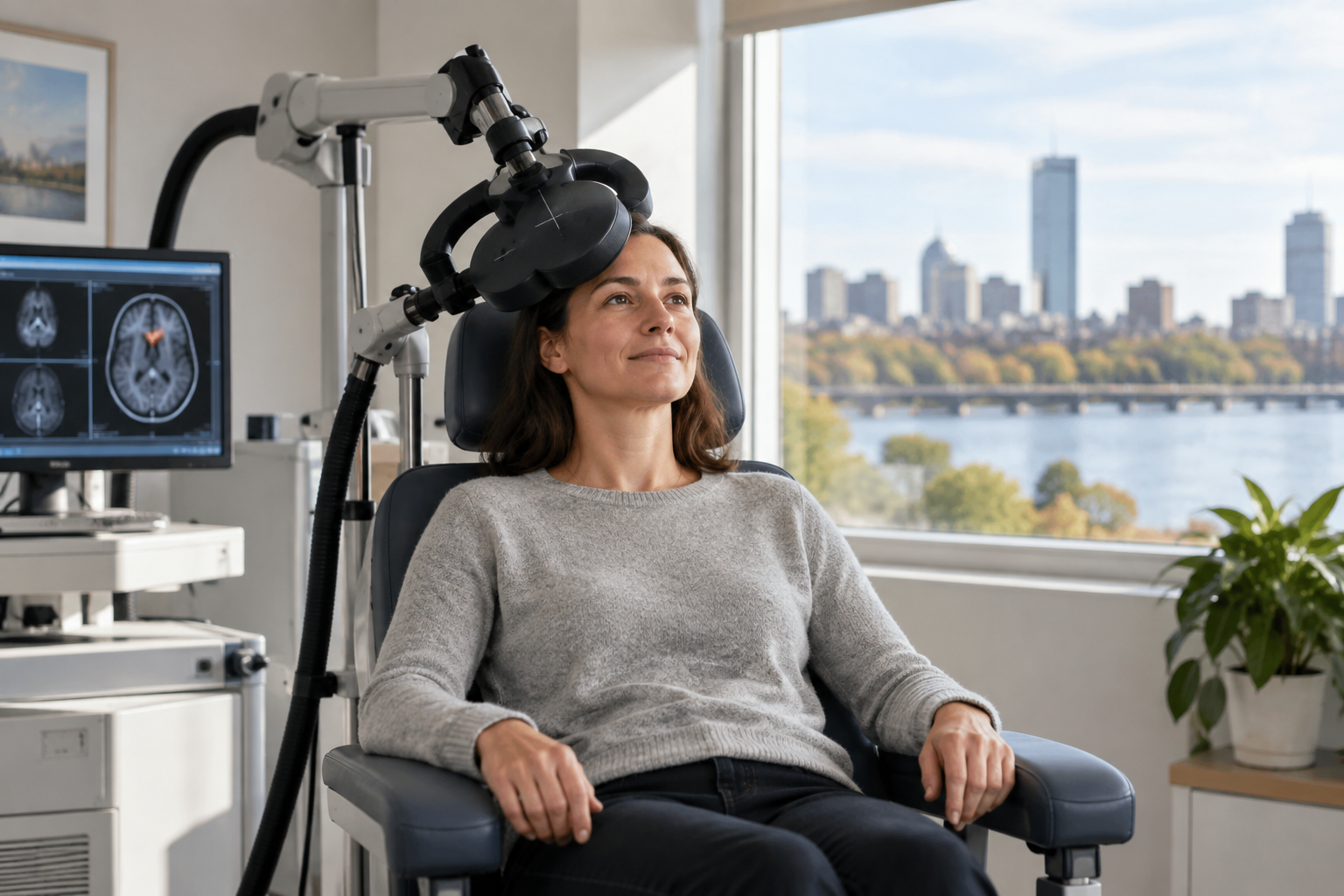
Brain & Behavior Research Foundation presents the finding as evidence that neuroimaging may help improve the way accelerated TMS is targeted. In the reported trial, fMRI information was used on an individual basis rather than relying on conventional scalp measurements alone.
The Foundation’s summary does not describe additional trial details in the supplied extract, such as the number of participants, the specific outcomes measured, or how long results were tracked. Its central reported result is that the individualized fMRI-guided approach performed better in the head-to-head comparison.
Publication context
Brain & Behavior Research Foundation published its report on July 9, 2026. The report frames the trial as evidence for the potential role of neuroimaging in improving clinical outcomes in psychiatry.
What this means for Massachusetts patients
For Massachusetts residents looking for TMS treatment locally, this report describes a developing targeting approach; the directory lists 146 published clinics in Massachusetts.
This is general information, not medical advice.
More Massachusetts reporting on treatment updates.
This report is educational and is not medical advice. Coverage, availability and eligibility can change; verify details with the named source or your care team.